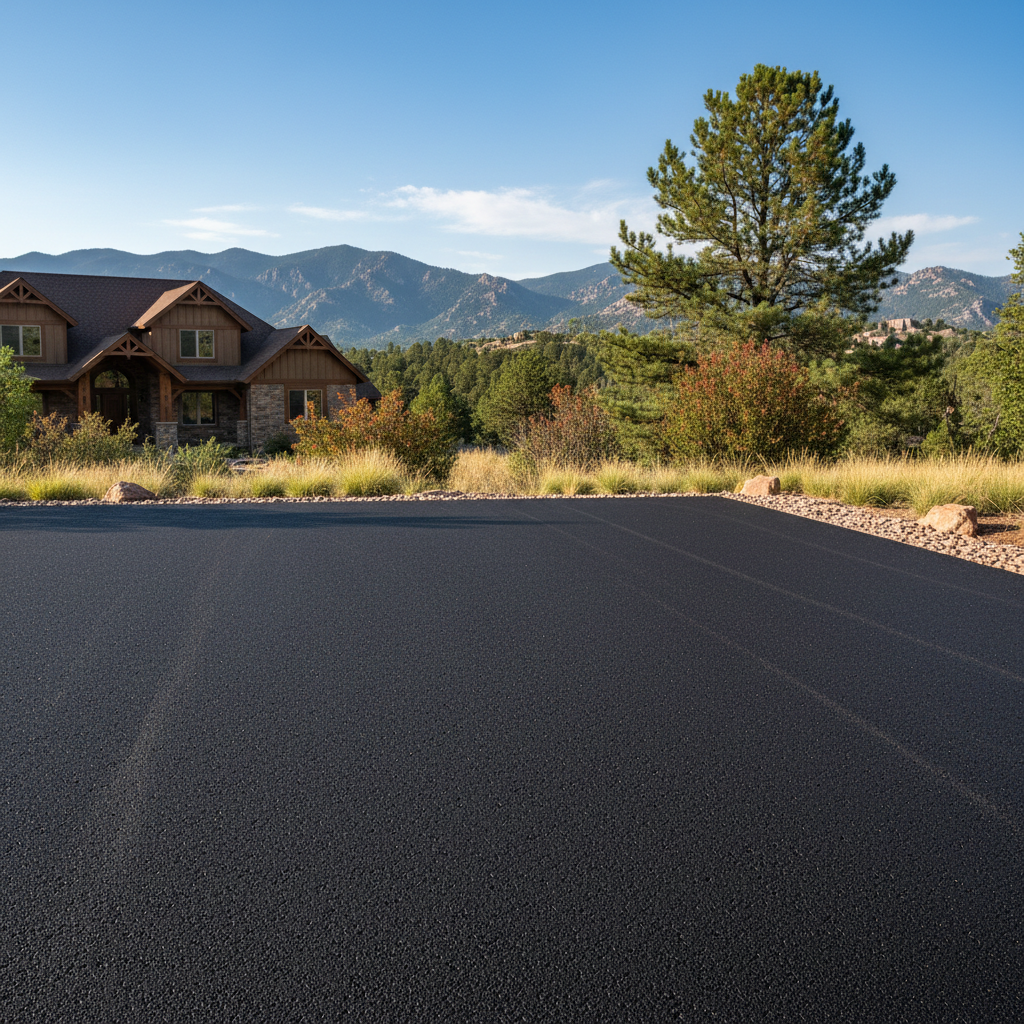
Let us talk about parking lots. You have one, you need it to work, and you probably have many questions about getting it paved right, especially here in Denver. We will skip the marketing talk. Our team is going to give it to you straight, from one local to another. These are the real questions we hear most often from homeowners as well as property managers. Here are our honest answers.
How long should a new Asphalt Parking Lot actually last in Denver?
A well-installed Asphalt Parking Lot, with the right maintenance, can last you a good 15 to 25 years. Our team knows that here in Denver, we have some unique challenges. The brutal freeze-thaw cycles we get every winter, as well as the intense UV radiation at our altitude, really beat up asphalt. So, while 15-25 years is the goal, it is not a guarantee without consistent upkeep.
What really makes the difference for your Denver Asphalt Parking Lot? It is the quality of the initial installation. This includes things like proper grading, a stable base, as well as the right asphalt thickness. If shortcuts are taken at the start, you will see problems like cracking and potholes much sooner. After that, it is all about maintenance. This means regular sealcoating, filling cracks as they pop up, as well as fixing any potholes fast.
What is the ideal asphalt thickness for a Parking Lot?
This is not a one-size-fits-all answer. Our team can give you some solid guidelines for your Denver Parking Lot. For most commercial Parking Lots that see regular car traffic, you are usually looking at about 3 to 4 inches of asphalt. If you have heavier vehicles, like delivery trucks or bigger SUVs, you will want to lean towards that 4-inch mark.
The asphalt layer itself is only part of the equation. What is underneath, that base layer, is just as important, if not more so. A thinner asphalt layer over a really solid, well-compacted base will always outperform a thicker asphalt layer over a poorly prepared base. We are talking about a stable sub-base of 6 to 8 inches of granular aggregate. If your contractor is quoting you super thin asphalt just to win the bid, they are setting you up for failure down the road with your Denver Parking Lot.
What is the best time of year to pave a Parking Lot in Denver?
Timing is everything with asphalt, especially with our Colorado weather. Generally, late spring, summer, as well as early fall are your best bets for a Denver Parking Lot paving project.
- Spring: Once the ground thaws and temperatures consistently stay above 50°F, spring is a great time. It is often less busy than summer, too.
- Summer: This is peak season for a reason. Warm, dry conditions help the asphalt cure quickly as well as properly. You just need to be aware that extreme heat can make asphalt too soft, so sometimes early mornings are key for our Advanced Asphalt Co team.
- Early Fall: Similar to spring, early fall offers mild temperatures as well as dry conditions. You want to get it done before those unpredictable cold snaps and frosts hit in October.
The main thing is you need consistent temperatures and dry conditions for the asphalt to bond as well as cure right. Our team is always watching the forecast closely for our Advanced Asphalt Co projects in Denver.
What kind of drainage solutions are important for a Denver Parking Lot?
Poor drainage is a Parking Lot's worst enemy. This is especially true here in Denver where we get heavy snowmelt as well as sudden downpours. Water pooling on your lot leads to cracks, potholes, and eventually, base failure. So, good drainage is not optional. It is essential for your Denver Parking Lot.
Here is what our team recommends:
- Proper Grading: This is foundational for any Parking Lot in Denver. Your lot needs to be graded so water naturally flows away from the surface as well as any buildings.
- Catch Basins: These are common and effective for smaller areas. They collect water and direct it into your drainage system. You need to make sure they are installed correctly with the pavement sloped towards them.
- Trench Drains: For larger Parking Lots, trench drains work great. This is especially true in areas with significant runoff. They can handle more water than standard catch basins.
- Curbing: Concrete curbing helps define the edges of your lot. It also directs water flow, protecting the asphalt edges from breaking down.
Sometimes, Advanced Asphalt Co even looks at more advanced solutions. This can include French drains as well as permeable pavers. This depends on the site and soil conditions in Denver. The goal is to get that water off your pavement as quickly as possible.
Do I need a permit for Parking Lot Paving in Denver?
Yes, you probably do need a permit for your Denver Parking Lot paving project. Most significant concrete or asphalt projects in Denver require permits. This is not just red tape. It is to make sure the work meets safety standards as well as local regulations.
If you are doing a full new installation or a major reconstruction, you will definitely need to go through the permitting process with the City and County of Denver. This can involve things like a Street Cut Permit if you are excavating. It can also involve a Street Occupancy Permit if work blocks public spaces. Even smaller projects like driveway connections or curb cuts can trigger permit requirements. Your contractor should handle all of this for your Advanced Asphalt Co project. It is good to know what is involved. Make sure they are licensed as well as insured. They should also be familiar with Denver's specific requirements.
What kind of maintenance schedule should I expect for a new Asphalt Parking Lot?
Once your new Asphalt Parking Lot is in, the work is not over. Proper maintenance is how you protect your investment. This is how you get those 15-25 years out of it. Here is a general schedule our Advanced Asphalt Co team recommends for Denver:
- Every 1-2 Years: Sealcoating. This protects against UV rays, moisture, as well as chemicals. It also keeps your lot looking sharp. In high-traffic areas, or places with heavy sun exposure like south-facing lots in the Highlands, you might need it annually.
- Every 3-5 Years: Crack Sealing. Small cracks are normal. If you leave them, water gets in, freezes, expands, and turns into bigger problems. Get those cracks filled promptly, especially before winter in Denver.
- As Needed: Pothole Repair. Do not wait on potholes. They are not just ugly. They are a safety hazard and will get worse fast. Patch them as soon as they appear.
- Annually: Striping and Markings. Faded lines are a safety issue. They can also impact traffic flow. Restriping keeps your lot organized as well as compliant. Our intense sun and snowplows mean striping fades faster here in Denver than in other places.
Think of it like changing the oil in your car. A little preventative care goes a long way to avoid major, expensive breakdowns for your Denver Asphalt Parking Lot.