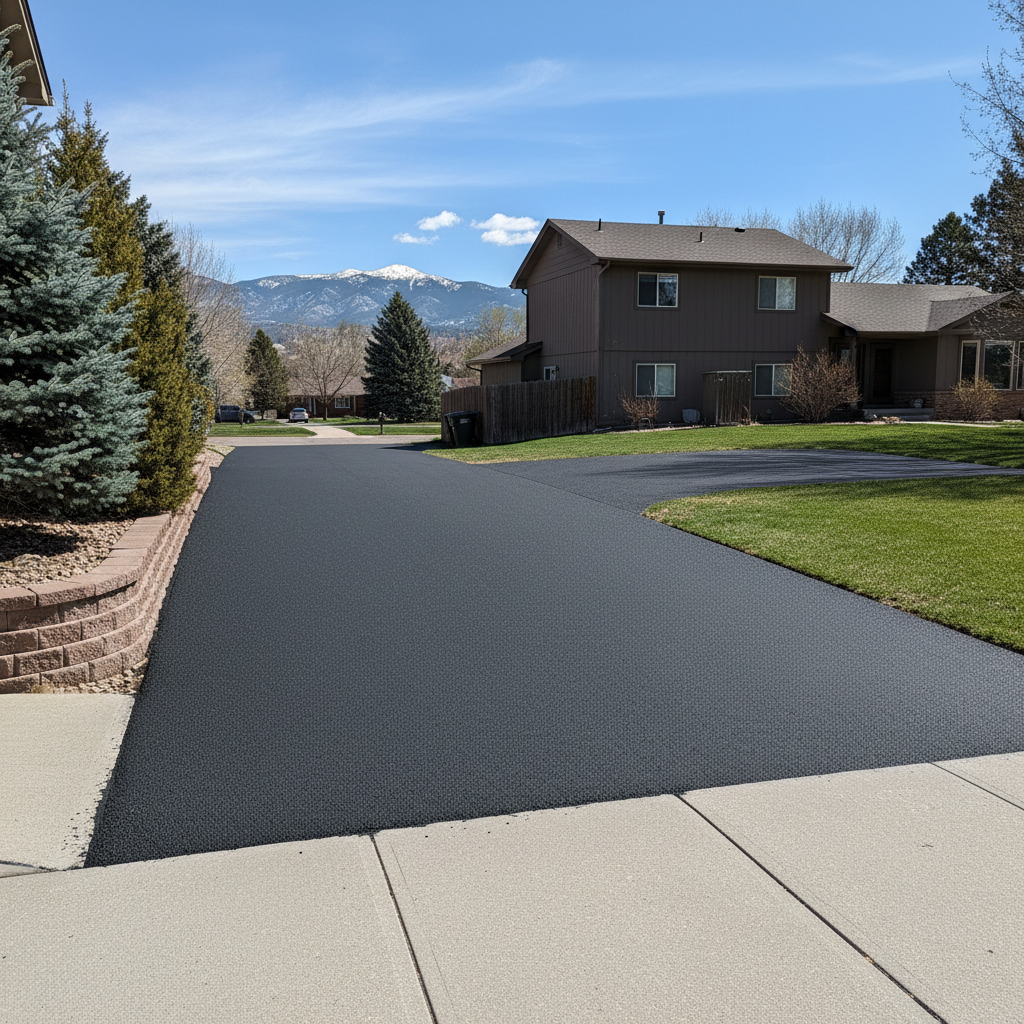
Alright, let us talk about Slurry Coating. You are looking to protect your asphalt. You also want to make it look sharp. In addition, you want to extend its life. This is especially true with Denver's weather. That is smart. However, we have seen many people around here make some mistakes. This includes folks from Stapleton as well as Highlands Ranch. They make these mistakes when they are planning a Slurry Coating job or hiring for one. We are here to tell you what to watch out for. This will help you avoid a headache as well as a lighter wallet.
Mistake #1: Confusing Slurry Coating with Sealcoating
This is an important point. Many homeowners use these terms interchangeably. They are not the same thing. You can think of it this way. Sealcoating is like a protective paint job for your asphalt. It is thinner. It is mostly for sealing as well as protecting against UV and water damage. Sealcoating is good for driveways that are in good shape. Slurry Coating, on the other hand, is more like a very thin layer of new asphalt. It is a cold mix of asphalt emulsion as well as fine aggregates. Fine aggregates are small crushed rock. It also has water as well as additives. It is thicker than sealcoat. Slurry Coating has a rougher texture. It is designed to fill minor cracks as well as improve skid resistance. This is a high-performance resurfacing treatment. It can extend the life of your asphalt pavement by 5-10 years. This is especially true for areas with moderate traffic. If your pavement has more than just minor fading, a Slurry Coat is often the better choice. You need to know what you are asking for with your Slurry Coating project in Denver.
Mistake #2: Skipping Important Prep Work
You would not paint a dirty, cracked wall without patching it first. The same goes for asphalt. Slurry Coating is not a magic fix for major damage. The surface needs serious attention before any Slurry Coating goes down. This means:
- Patching Potholes and Alligator Cracking: Any significant failures or potholes need to be repaired first for your Slurry Coating project.
- Sealing Larger Cracks: Cracks wider than about a quarter-inch need to be sealed. Water is asphalt's worst enemy. This is especially true with our freeze-thaw cycles here in Denver. A Slurry Coat alone will not stop water from getting into bigger cracks. This can cause more damage underneath.
- Thorough Cleaning: The surface has to be swept clean of all debris as well as dirt as well as oil as well as loose material. If there is oil, it needs to be removed or primed. Otherwise, the Slurry Coating will not stick.
A contractor who tries to skip these steps is a big red flag. They are cutting corners. You will pay for it later with early failure of your new Slurry Coating surface.
Mistake #3: Ignoring Denver's Weather
Our climate here in Denver is serious. We get intense sun as well as hot summers as well as cold winters. We also get those strong freeze-thaw cycles. All of this puts a lot of stress on asphalt. The weather conditions have to be just right for a Slurry Coat to cure properly and last. You are looking for consistent temperatures above 50°F. This includes both air and pavement temperatures. These temperatures are needed for at least 24 to 48 hours after application. Humidity also matters. High humidity slows down drying. You should not apply Slurry Coating if rain is in the forecast within 24-48 hours. Trying to apply Slurry Coating when it is too cold or too hot or if rain is coming means it will not cure right. It will not bond. You will just be throwing money away on your Slurry Coating project. A good contractor will watch the forecast closely. They might even reschedule if conditions are not ideal for Slurry Coating in Denver.
Mistake #4: Not Asking About the Aggregate Type
We mentioned that Slurry Coating has aggregates. There are different types. These include Type I as well as Type II as well as Type III. They are used for different situations. For residential streets or driveways, you will typically see Type II. This is a general-purpose mix. It provides a good balance of crack filling as well as surface texture. If a contractor can not tell you what type of aggregate they are using or why, that is a sign. They might not be as knowledgeable as they should be about Slurry Coating. The aggregate size affects the texture as well as the performance. It is not a detail to overlook for your Slurry Coating job in Denver.
Mistake #5: Rushing the Curing Process
Once that Slurry Coating is down, you must give it time. It typically needs 4-8 hours for light traffic. However, full curing can take 24-48 hours. Sometimes it takes longer depending on conditions. We know you want your driveway back. But driving on it too soon can damage the fresh Slurry Coating surface. It can also leave tire marks. This will compromise its longevity. A good contractor will give you clear instructions. This includes when it is safe to resume normal use. If they tell you it is good to go in an hour, be careful.
Mistake #6: Choosing the Cheapest Bid Without Checking
Look, we all want a good deal. But when a bid for a Slurry Coating project seems too good to be true, it usually is. Very low estimates can mean a contractor is planning to use low-quality materials. They might also cut corners on prep work. Or they might not be properly licensed as well as insured. In Denver, we have expansive clay soils in some areas. We also have constant weather challenges. You need quality work that stands up. Always check references. Look for local reviews. Make sure they are clear about their process as well as their materials. A detailed, itemized estimate is a good sign. Advanced Asphalt Co. always aims for quality that lasts. This is because a cheap job now often means expensive repairs later for your Slurry Coating.
By avoiding these common mistakes, you will be well on your way to a successful Slurry Coating project. This will protect your investment. It will also keep your property looking great for years to come in Denver.