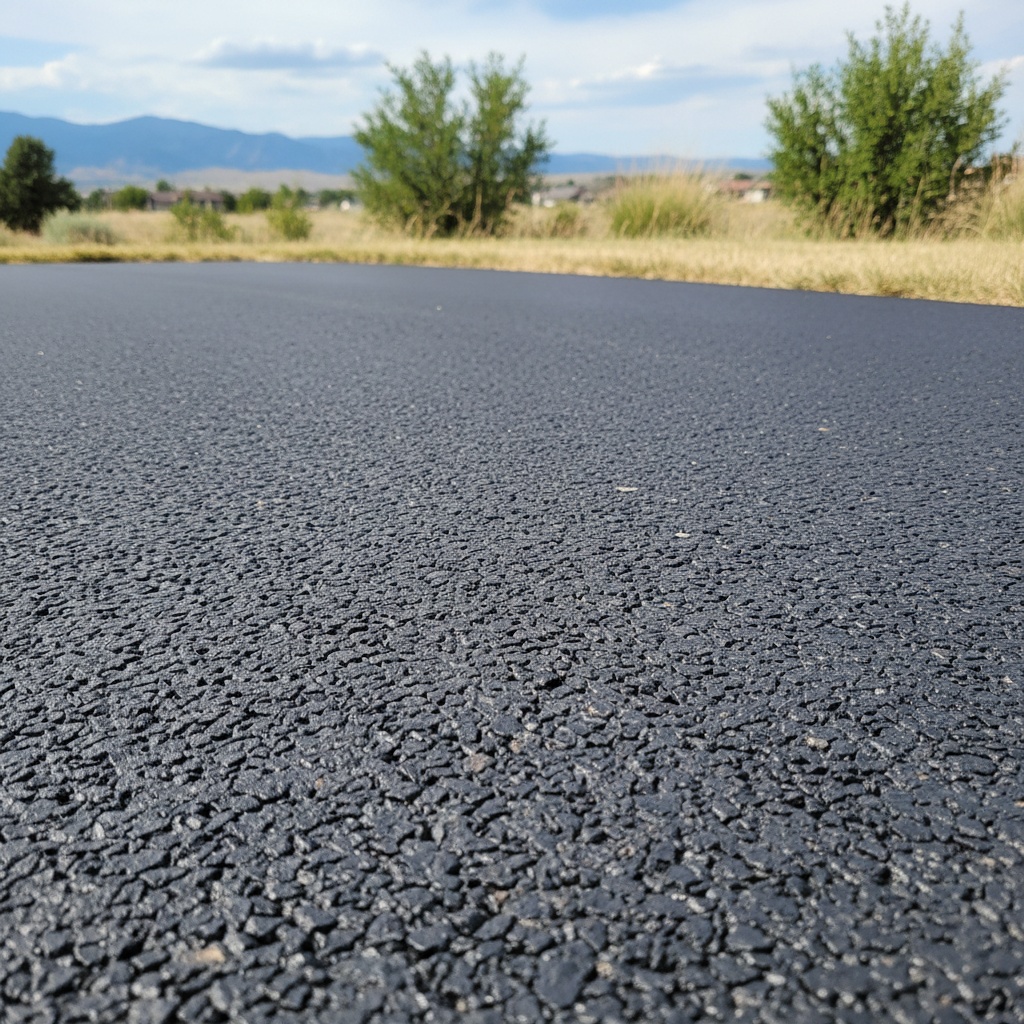
Running a business in the Denver metro area means you have enough on your plate without trying to decode contractor jargon. When property managers and business owners call us at Advanced Asphalt Co, they usually have the same few questions about keeping their lots and access roads in good shape. Let us talk straight about what commercial asphalt actually requires around here in Denver, CO.
How long should a commercial parking lot last in Denver's climate?
You can generally expect twenty to twenty-five years out of a well-installed commercial parking lot, but that number comes with important conditions. Our intense Colorado sunshine bakes the oils right out of the binder, and those wild spring temperature swings where it drops thirty degrees in an hour will test any pavement. If you skip sealcoating and ignore minor cracks, you might only get ten years before you are looking at a total rebuild for your commercial parking lot in Denver.
Can you pave a commercial lot during winter?
We get asked this all the time when a property owner suddenly notices a massive pothole in January. The short answer is no, not usually. Hot-mix asphalt needs proper ambient and base temperatures to compact correctly. While we can throw down cold-patch as a temporary emergency fix when it is freezing, any real Commercial Asphalt Paving work has to wait until things warm up consistently in the spring across Denver, CO.
How do we keep our business open while the lot is being paved?
Nobody wants to lose customers because the entrance is blocked off. Advanced Asphalt Co almost always phases larger commercial jobs to prevent this issue. We will pave one half of your lot while your customers and employees use the other, then switch sides once the first half cures. It takes a little more coordination, but keeping your doors accessible is always worth the effort for businesses in Denver.
Why does my commercial lot get standing water after a heavy snow melt?
Blame our shifting subgrade soils and poor initial grading. If the base was not compacted right or if settling has occurred over the years, low spots form quickly. Standing water is asphalt enemy number one because it softens the binder and leads straight to alligator cracking and potholes. Fixing drainage issues usually requires milling out the bad spot and reshaping the sub-base before laying down new material.
When is the right time to choose an overlay instead of full replacement?
An Asphalt Overlay works great if your foundation is still solid and less than thirty percent of the surface is cracked. We just mill down the edges, lay a tack coat, and put down a fresh two-inch layer of hot mix. But if your base is completely shot and pumping mud through the cracks, an overlay is just a waste of money for property owners in Denver, CO.
How long before vehicles can drive on the new asphalt?
We usually tell people to stay off fresh commercial paving for at least twenty-four to forty-eight hours. Heavy delivery trucks and garbage haulers might need even longer, especially during those hot July afternoons when the asphalt stays pliable. Rushing heavy traffic onto warm asphalt will leave ruts that you will be staring at for years, so Advanced Asphalt Co makes sure to give proper curing timelines for every Denver project.