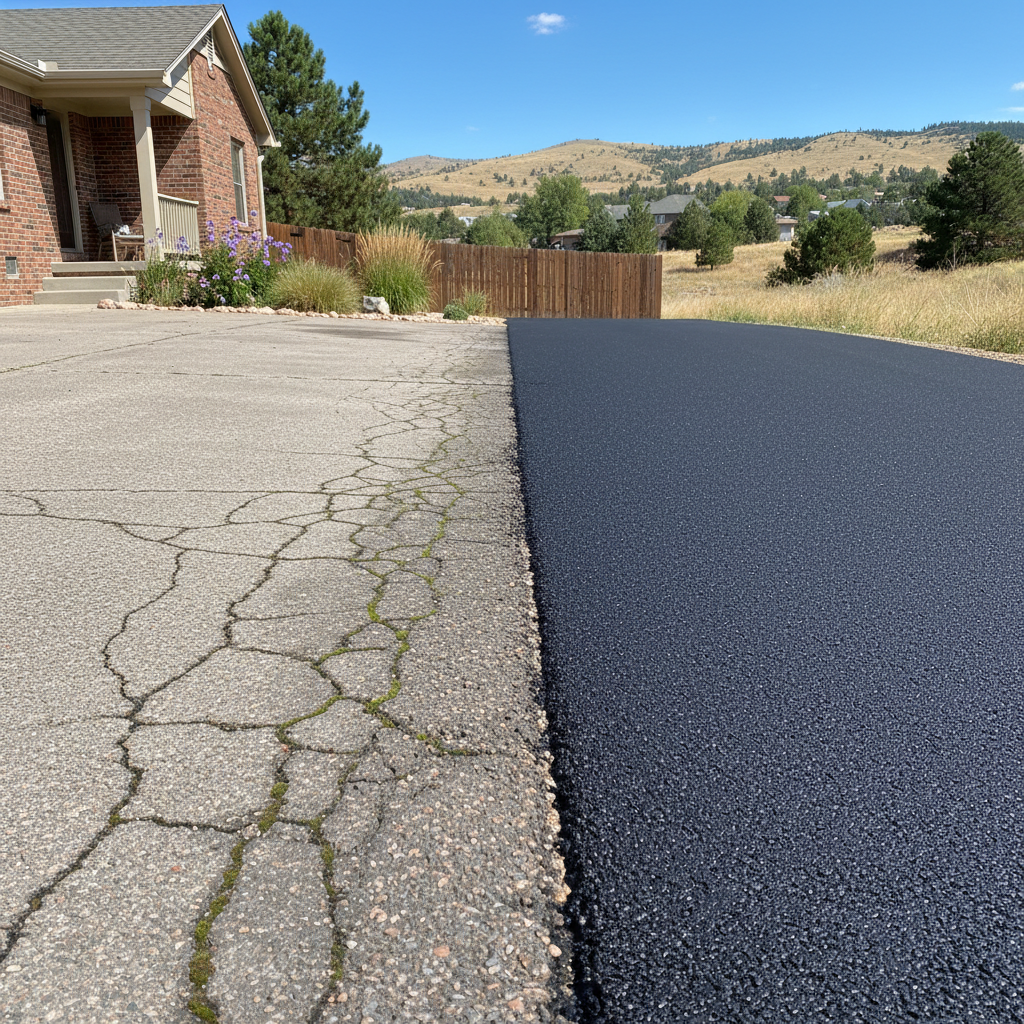
Should you go with asphalt or concrete for your new driveway? That's a question I get asked all the time, and it's a good one. There's a lot of information out there, and frankly, some of it's just plain wrong or doesn't apply to us here in Denver. As someone who's been laying down pavement for years, I've seen firsthand what works and what doesn't in our unique climate.
Initial Cost: Where Your Wallet Feels It First
Let's talk money first, because that's usually the biggest factor for folks. Generally speaking, asphalt is almost always cheaper upfront than concrete. You're typically looking at 30-50% less for an asphalt driveway compared to a concrete one of the same size. Why? The materials are less expensive, and the installation process can be a bit quicker. If you're on a tighter budget and need a good, solid surface, asphalt is going to be your friend here.
Now, don't get me wrong, cheaper doesn't mean bad. It just means different. Concrete requires more labor, more specialized equipment for pouring and finishing, and the materials themselves carry a higher price tag. So, if your primary concern is the initial outlay, asphalt usually wins hands down.
Durability & Our Crazy Denver Weather
This is where the rubber meets the road, especially in Denver. Our freeze-thaw cycles are brutal. One day it's 60 degrees and sunny, the next it's 15 and snowing. That kind of temperature swing puts a lot of stress on any paved surface.
- Asphalt: It's flexible. That's its superpower. Asphalt can expand and contract with temperature changes without cracking as easily as concrete. It's designed to be a bit more forgiving. When it does crack, repairs are often simpler and less noticeable. We've laid countless asphalt driveways in neighborhoods like Stapleton (or Central Park, as it's called now) where people appreciate that flexibility when the ground shifts a bit.
- Concrete: It's rigid. Very rigid. While incredibly strong under compression, concrete doesn't like to move. Those freeze-thaw cycles? They'll cause concrete to expand and contract, and if it can't move freely, it'll crack. Once concrete cracks, it's a much bigger headache to fix properly, and those repairs rarely blend in seamlessly. You'll often see concrete driveways with lots of expansion joints, and those are there for a reason – to try and control where the cracking happens.
For our specific conditions, I lean towards asphalt for its ability to handle the constant temperature fluctuations without major issues. It just holds up better to the seasonal abuse we get here.
Maintenance: What You'll Be Doing Down the Road
Both surfaces need some love, but it's different kinds of love.
- Asphalt: It needs sealcoating. Think of it like sunscreen for your driveway. You should plan to sealcoat your asphalt driveway every 2-3 years. This protects it from UV rays, water penetration, and keeps it looking fresh. It's a relatively inexpensive process, and if you keep up with it, your asphalt driveway can easily last 20-30 years. Small cracks are easy to fill before they become big problems.
- Concrete: It's lower maintenance in the sense that you don't need to sealcoat it regularly (though sealing it every few years can help protect it from stains and moisture). However, when concrete fails, it often fails big. Spalling (flaking surface), pitting, and large cracks are common. Repairs are typically more involved and costly. You'll also need to be vigilant about keeping it clean, as stains from oil or rust can be tough to remove.
If you're okay with a routine sealcoating every few years, asphalt is a very manageable surface. If you want something you can mostly forget about until something major goes wrong, concrete might seem appealing, but those major repairs can be a real pain.
Appearance & Curb Appeal
This is subjective, of course, but let's talk about the typical look.
- Asphalt: It's black, smooth, and has a clean, uniform appearance when new. It can look very sharp. Over time, without sealcoating, it can fade to gray. With proper maintenance, it keeps that dark, rich look that many people prefer.
- Concrete: It's light gray, though you can get it stained or stamped to mimic other materials. It has a more traditional, classic look for some. The downside is that stains show up much more on concrete. Oil drips from your car, rust from an old planter – they'll all be very visible.
Both can look great. It really comes down to personal preference and the style of your home. If you want a crisp, dark look that contrasts well with landscaping, asphalt is a great choice. If you prefer a lighter, more traditional feel, concrete might be your pick.
My Recommendation for Denver Homeowners
Look, I'm an asphalt guy, so you might think I'm biased. But I've seen enough driveways come and go to tell you honestly: for most Denver homeowners, asphalt is the smarter choice.
It's more affordable upfront, it handles our crazy weather and ground movement much better due to its flexibility, and its maintenance, while routine, is generally less costly and easier to manage than concrete repairs. You get a durable, attractive surface that's built to last in our specific climate.
If you're still on the fence or want to talk specifics about your property, give us a call at Advanced Asphalt Co. We're happy to walk you through the options and give you an honest assessment. We've been doing this for a long time, and we know what works here.