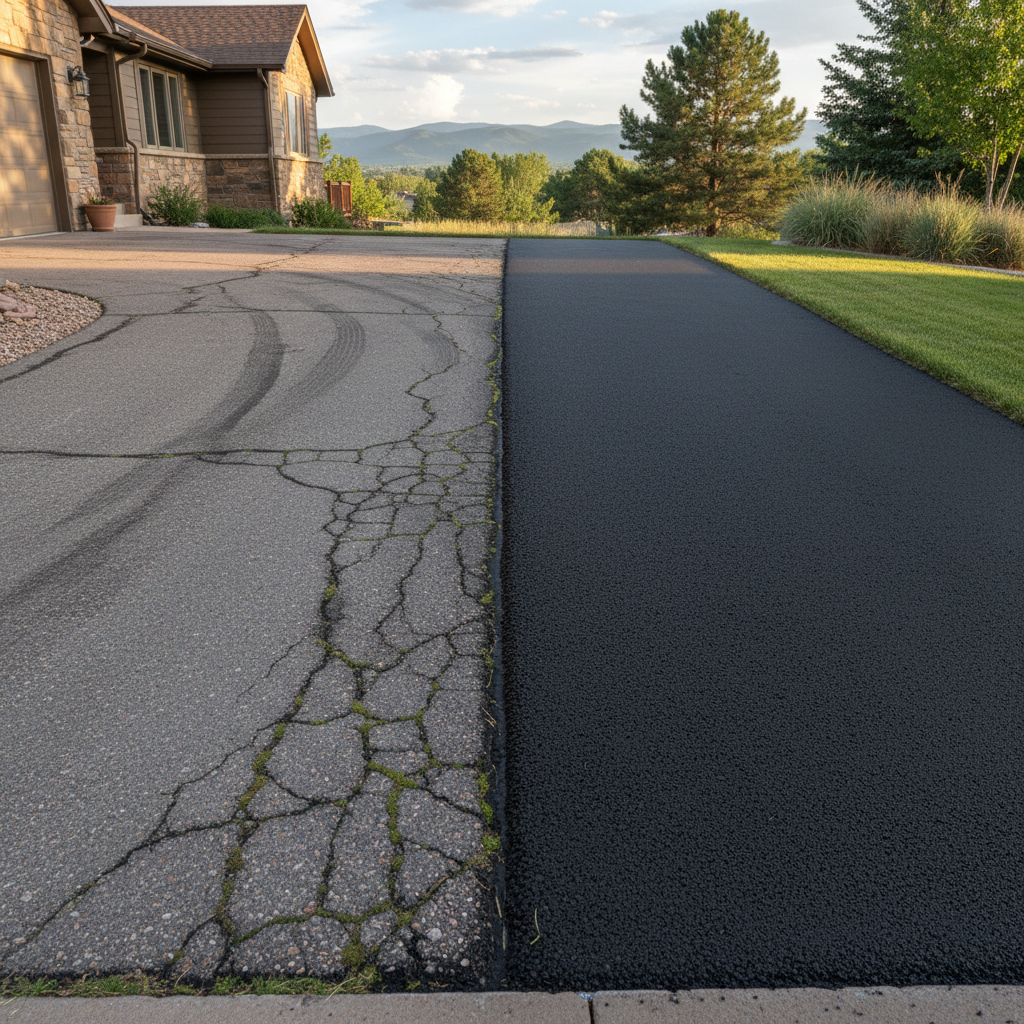
So, your asphalt driveway's seen better days, huh? Maybe it's got more cracks than a Colorado winter windshield, or it's just plain old and tired. When you're looking at fixing it up, you've generally got two main paths for residential asphalt: a brand-new installation from scratch, or a complete repave. I get a lot of calls about this, and honestly, it's not always an easy choice. Let's talk about what each option really means for you and your home here in Denver.
New Asphalt Driveway: The Full Monty
This is exactly what it sounds like: we're tearing out whatever's there now – old asphalt, concrete, gravel, even just dirt – and starting fresh. We're talking about excavating down, prepping the subgrade, laying down a good, solid base material (usually crushed aggregate), compacting it properly, and then laying down your new asphalt layers. It's the most comprehensive approach, and for good reason.
- Cost: Yeah, this is usually the most expensive option upfront. You're paying for demolition, hauling away debris, more excavation, and more material. There's just more labor and material involved from the ground up.
- Durability & Longevity: This is where a new installation shines. When done right, with a proper base and good drainage, a new asphalt driveway can easily last 20-30 years, especially with regular maintenance. You're building it to last from the foundation up, which is crucial with our freeze-thaw cycles here in Denver. A solid base prevents a lot of future headaches.
- Maintenance: Initially, it's pretty low. You'll want to sealcoat it within the first year or two, and then every 2-3 years after that. Patching might be needed down the line for minor cracks, but you shouldn't see major issues for a long time.
- Appearance: It's brand new! Smooth, black, pristine. It really boosts your home's curb appeal. You can get precise edges and a perfectly level surface.
- Best For: Driveways with severe structural damage, poor drainage issues, significant dips or heaving, or if you're changing the footprint or layout of your driveway. Also, if your current driveway is concrete or just gravel, a new asphalt installation is your path to a paved surface.
Asphalt Repave: A Fresh Top Layer
A repave, sometimes called a remove and replace, is a bit different from an overlay (which we've talked about before). With a repave, we're not just putting a thin layer over old asphalt. We're actually removing the existing asphalt entirely, usually down to the base layer. Then, we inspect that base. If it's still good and stable, we'll re-compact it, make any minor repairs, and then lay down new asphalt layers, just like a new installation, but without the initial excavation of the subgrade.
- Cost: Generally less expensive than a full new installation because you're not doing as much excavation or subgrade prep. You're still paying for demolition and hauling, but often less base material if the existing base is sound.
- Durability & Longevity: This option offers excellent durability, often comparable to a new installation, assuming the underlying base is in good shape. If the base is compromised, a repave won't fix those deeper issues, and you might see problems sooner. But if the base is solid, you're looking at 15-25 years.
- Maintenance: Similar to a new installation – regular sealcoating and addressing cracks as they appear.
- Appearance: Just like a new installation, you get that fresh, smooth, dark asphalt look. It's a significant aesthetic upgrade.
- Best For: Driveways where the asphalt surface itself is heavily deteriorated (lots of alligator cracking, potholes, crumbling edges) but the underlying base is still stable and drains well. It's also a good option if you want a completely new surface without the full cost of starting from bare earth.
Which One Should You Choose for Your Denver Home?
Here's the deal: for most Denver homeowners, especially with our expansive clay soils and the constant freeze-thaw cycles we get, the base is everything. If your current driveway has significant dips, humps, or areas that consistently hold water, or if you see a lot of deep, structural cracking that goes beyond just the surface, you're probably looking at a full new installation. You need to address those subgrade and base issues properly, or you're just putting a band-aid on a bigger problem.
However, if your driveway's issues are mostly on the surface – lots of surface cracks, some minor potholes, or just a generally worn-out appearance – but the overall grade is good and it drains well, a repave can be a fantastic, cost-effective solution. You get all the benefits of new asphalt without the extra excavation work.
The biggest factor in making this decision is always the condition of your existing base. That's something we'll assess thoroughly when we come out for an estimate. We'll dig a few test spots, look at drainage, and really figure out what's going on underneath. Don't let anyone tell you they can decide without checking that out.
Ultimately, both a new asphalt driveway and a complete repave will give you a beautiful, functional surface that adds value to your home. It just comes down to what's going on beneath the surface and what makes the most sense for your budget and long-term goals. Give us a call at Advanced Asphalt Co, and we'll come take a look at your place and give you an honest assessment.