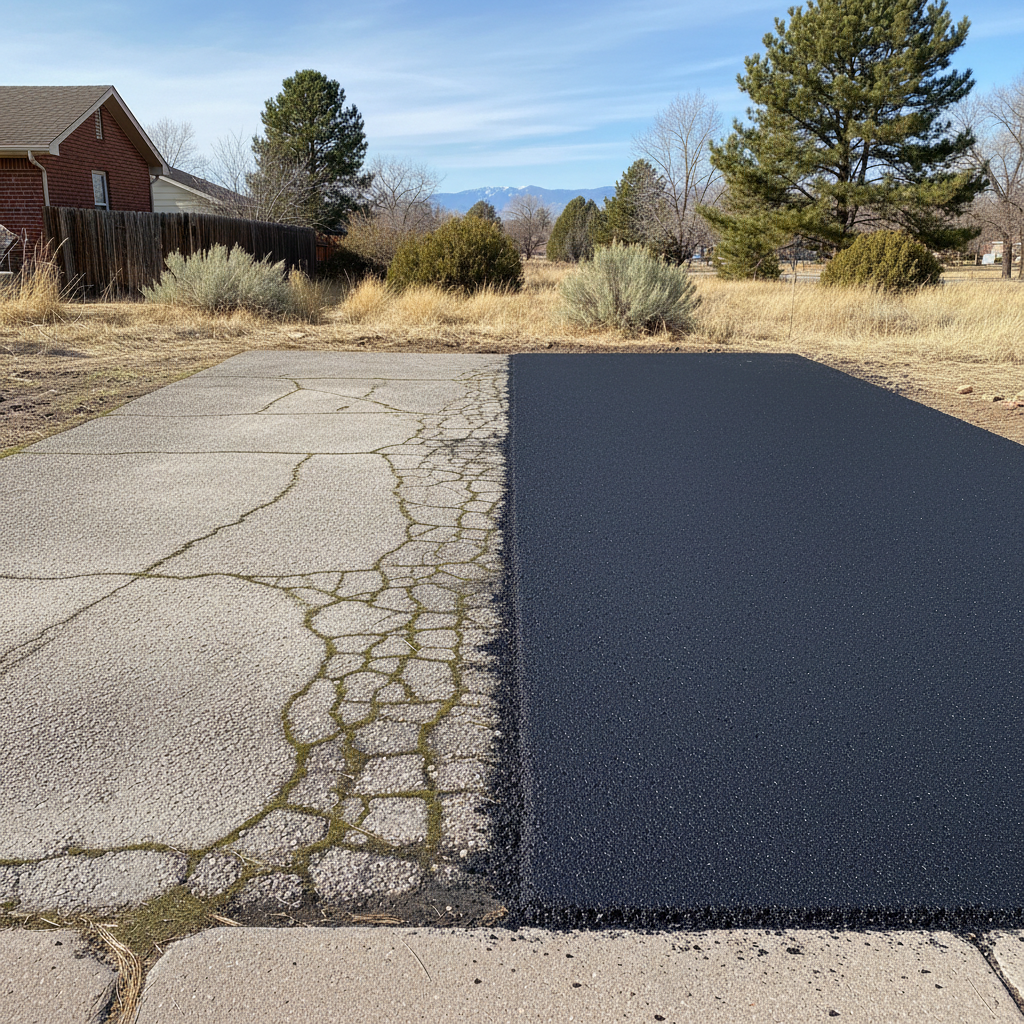
Your asphalt driveway is a big investment, and keeping it in good shape means making smart choices. But when you see those first signs of wear – maybe some hairline cracks or a faded look – you've got a couple of main paths you can take: sealcoating or patching. They're both important, but they do very different jobs, and knowing which one you need, and when, can save you a lot of headache and money down the road.
Sealcoating: The Preventative Powerhouse
Think of sealcoating like sunscreen for your driveway. It's a protective layer, usually a coal tar or asphalt emulsion, that you apply over the entire surface. What's it doing? A few key things.
- UV Protection: The sun's UV rays are brutal, especially here in Denver with our high altitude. They dry out the binders in your asphalt, making it brittle and prone to cracking. Sealcoat blocks those rays.
- Water Resistance: It seals tiny pores and minor surface cracks, preventing water from seeping into the sub-base. Water is asphalt's worst enemy; when it freezes and thaws (which happens a lot here in Colorado, sometimes multiple times in a single day during winter), it expands and contracts, tearing your driveway apart from the inside out.
- Improved Appearance: A fresh coat of black sealcoat makes your driveway look brand new, enhancing your home's curb appeal. It brings back that deep, rich black color.
- Cost-Effective Maintenance: It's generally much cheaper than major repairs or replacement. Regular sealcoating, say every 2-3 years, extends the life of your driveway significantly.
Now, what sealcoating won't do is fix major structural issues. If you've got big potholes, deep cracks, or areas that are crumbling, sealcoat will just cover them up temporarily. It's not a magic bullet for existing damage; it's a shield against future damage.
Patching: The Surgical Strike
Patching, on the other hand, is about fixing specific problems. When you've got a pothole, an alligator-cracked area, or a significant crack that's wider than, say, a quarter-inch, you're looking at patching. There are a few ways to do it, but the goal is always the same: remove the damaged section and replace it with new asphalt.
- Pothole Repair: This usually involves cutting out the damaged section, preparing the base, and filling it with hot asphalt mix. Done right, it blends in and restores the structural integrity of that spot.
- Crack Filling: For larger, isolated cracks, we'll clean them out and fill them with a hot rubberized sealant. This keeps water out and allows the asphalt to expand and contract without further damage. It's crucial for preventing small cracks from becoming big problems.
- Alligator Cracking: This is when your asphalt looks like alligator skin – a network of interconnected cracks. It usually means the base underneath is failing. For this, we often cut out the entire affected area, address the base issue, and then patch it with new asphalt.
- Structural Integrity: Patching directly addresses and fixes compromised areas, preventing them from spreading and causing more widespread failure.
The downside? Patching can be more expensive per square foot than sealcoating, and if not done expertly, a patch might not blend perfectly with the surrounding asphalt. You'll see the repair, but it's a functional fix, not primarily an aesthetic one.
Which One Do You Need, and When?
Here's the deal: you probably need both at different times. They're partners in driveway longevity, not competitors.
If your driveway is relatively new (1-3 years old) and just starting to look a little faded or has very fine hairline cracks, sealcoating is your go-to. It's proactive maintenance. You want to get ahead of the damage, especially with our intense sun and the freeze-thaw cycles we get here in places like Highlands Ranch or even downtown Denver.
If you've got noticeable potholes, deep cracks, or areas that are breaking apart, you need patching first. You can't sealcoat over a pothole and expect it to disappear. That's like putting a band-aid on a broken leg. Once those structural issues are fixed, then you can consider sealcoating the entire driveway to protect those repairs and the rest of your asphalt.
My recommendation for Denver homeowners? Don't wait until you have major problems. Regular inspections are key. Walk your driveway a couple of times a year. Look for new cracks, soft spots, or areas where the asphalt is starting to look dry and gray. If you see those things, give us a call at Advanced Asphalt Co. We can come out, take a look, and give you an honest assessment of whether you need a fresh sealcoat, some targeted patching, or a combination of both. It's about smart maintenance, not just reacting to disasters. Keeping up with it means your driveway will last you a good long time, saving you from a full replacement much sooner than you'd like.